
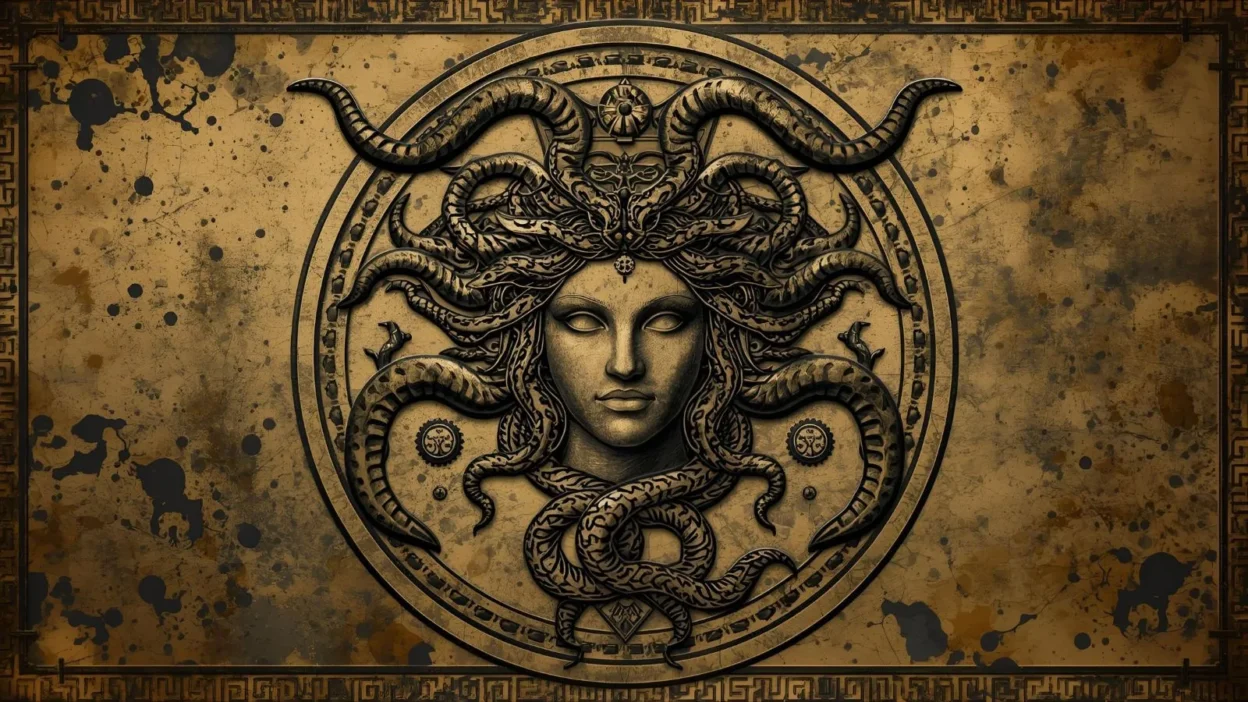
Once, in the middle of a healing retreat in Greece, I met a woman named Lira. She had a large, detailed tattoo of Medusa inked across her back.
When I asked her why she chose Medusa, her eyes filled with tears. “Because I’ve been hurt,” she said, “but I’ve learned to protect myself.” That moment stuck with me.
Medusa isn’t just a monster from myth—she’s a mirror of transformation, trauma, and power.
Her face, feared for centuries, actually holds a deeper message for those on spiritual paths.
In this article, we’ll explore Medusa symbolism in all its forms—from tattoos to ancient art—to help you understand how her story might reflect your inner journey.
Whether you’ve encountered snakes in a dream, faced emotional betrayal, or struggled with shame, Medusa can be a powerful guide. Let’s begin.
Medusa Symbolism Tattoo
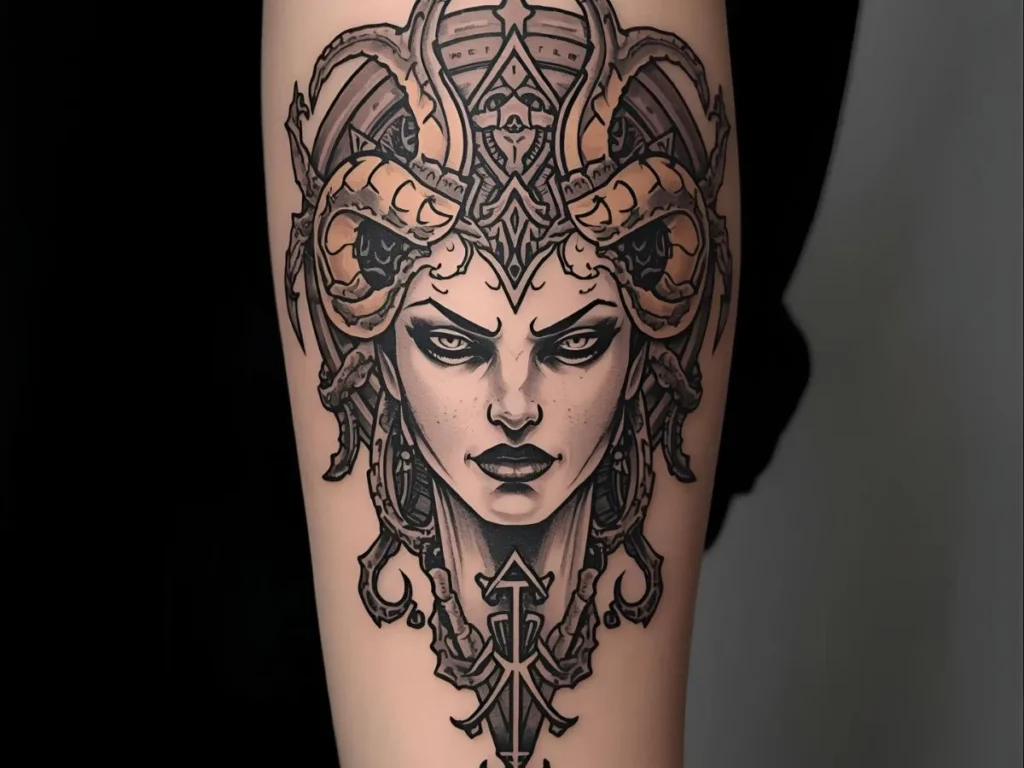
A Medusa tattoo is one of the most emotionally loaded tattoos you can get. It often represents protection, trauma recovery, and feminine rage.
For survivors of abuse, Medusa becomes a symbol of reclaiming power.
Her stare turns those who harm into stone—not because she’s evil, but because she’s learned how to defend herself.
Spiritually, a Medusa tattoo acts like a shield. In ancient cultures, especially among the Greeks, Medusa’s face was used as a protective amulet. Tattoos continue this legacy today.
When someone chooses Medusa’s image on their body, they may be saying:
- “I have survived something destructive.”
- “I’m reclaiming my voice and space.”
- “My anger is sacred, not shameful.”
For men, it can symbolize embracing a feminine protector or learning from the “wounded feminine” inside themselves. It’s not just art—it’s a spiritual declaration.
Medusa Symbolism Meaning
What does Medusa symbolize? It depends on the context, but some consistent spiritual meanings include:
- Survivorship after trauma
- Feminine power and rage
- Transformation through pain
- Guardianship and inner strength
Medusa starts as a beautiful mortal, often said to be a priestess. But after being violated by Poseidon in Athena’s temple, she is transformed into a monster—not because she did something wrong, but because she was punished by the system.
Her meaning, therefore, ties to the emotional wounds of betrayal and society’s judgment.
Yet spiritually, she rises from this. The snakes, once terrifying, become symbols of wisdom, rebirth, and kundalini energy—awakening the divine feminine within.
Medusa Symbolism SA (Sexual Assault)
In recent years, Medusa has become a symbol for survivors of sexual assault (SA).
Her myth is often re-read as a tragic tale of a woman wronged by the gods and punished for being a victim.
Many people—especially women—resonate deeply with this. Medusa becomes not a villain, but a sacred protector of survivors. Her image is not only cathartic, it becomes a form of emotional justice.
Spiritually, this version of Medusa asks us:
- What parts of you were turned to stone because of pain?
- How can you use your trauma to protect others?
- What would it feel like to be feared, not as a monster, but as someone who commands respect?
Healing through Medusa means facing your fear, honoring your wounds, and standing boldly in your power.
The Raft of the Medusa Symbolism

The Raft of the Medusa is a famous 19th-century painting by Théodore Géricault. It shows shipwreck survivors clinging to life after a tragedy caused by human failure.
Although it doesn’t depict the mythological Medusa directly, its name invokes her energy.
Why? Because the ship was named “Medusa”, and the painting captures a symbolic descent into horror and rebirth. The raft becomes a place of both desperation and resilience.
Spiritually, this painting represents:
- The collapse of false safety
- Survival against chaos
- The truth rising from the depths
Like the mythological Medusa, the painting dares us to look at what society wants to hide—the pain, the injustice, the desperation. It also reminds us that through that suffering, a new self can emerge.
What Medusa Symbolism Tells Us Spiritually
At its heart, Medusa symbolism tells us:
- Pain can transform you into something powerful
- Beauty and terror can coexist
- Inner monsters are often born from outer injustices
Her myth reminds us of the shadow side of femininity—the power that comes from facing your own rage, your own grief, and your own story.
In spiritual terms, she’s also linked to:
- Shadow work
- Divine feminine awakening
- Third-eye protection
- Snake medicine (transformation, wisdom)
The message is this: You are not a victim. You are a guide through the dark.
Medusa Symbolism in Greek Mythology

In traditional Greek mythology, Medusa is one of the Gorgons—three sisters with snakes for hair. Only Medusa is mortal.
Originally, she’s a temple priestess of Athena. When Poseidon rapes her, Athena punishes her by turning her into a monster.
Her once-beautiful hair becomes writhing snakes. Her gaze can now turn men to stone.
But the spiritual message is layered:
- She is a scapegoat turned sacred
- She is beauty betrayed, then made powerful
- She is divine rage made flesh
The Greeks also used Medusa’s image on shields and armor. Why? Because she was a guardian against evil—even in her terrifying form.
Medusa Symbolism Psychology
From a psychological perspective, Medusa reflects:
- Repressed rage
- Shame turned outward
- The fear of feminine power
Carl Jung might call her a symbol of the “shadow feminine”—the part of the psyche we are told to hide.
When unintegrated, this shadow becomes “monstrous.” But when acknowledged, it becomes wisdom.
Psychologist Sigmund Freud even linked Medusa’s stare to the fear of castration, showing how deeply her myth connects to human vulnerability and power.
Spiritually, understanding this can help you integrate your pain, rather than fear it.
Perseus and Medusa Symbolism
In the myth, Perseus is sent to kill Medusa. He can’t look at her directly, or he’ll be turned to stone. So, he uses a mirror to behead her.
This part of the story is often interpreted as:
- Patriarchy silencing feminine rage
- The fear of facing direct truth
- A lesson in confronting trauma indirectly
But even in death, Medusa is powerful. From her severed neck springs Pegasus, the winged horse—a symbol of inspiration and freedom.
So, Perseus and Medusa together represent the duality of destruction and rebirth. Her death gives life. Her rage births beauty. Her pain gives flight.
Real-Life 3 Short Scenarios
- The Woman Who Took Her Voice Back
A 30-year-old woman, after surviving an abusive relationship, got a Medusa tattoo across her ribs. She said, “Now, I never forget that I’m no longer afraid to look anyone in the eye.” - The Teen Who Faced the Mirror
A teenage boy with anxiety said that learning about Medusa helped him understand his bottled-up anger. “I’m not a monster,” he whispered. “I’m just scared of being seen.” - The Artist Who Found Her Snakes
A painter in South Africa reimagined Medusa as a Black woman with gold serpents for hair. Her exhibit was titled “Still Sacred”, inspired by reclaiming cultural and personal identity.
FAQs
1. What is the spiritual meaning of Medusa?
Medusa symbolizes transformation, feminine power, protection, and emotional justice—especially after trauma.
2. Why do survivors of sexual assault connect with Medusa?
Because her story mirrors betrayal, punishment, and ultimately, reclaiming power after being harmed.
3. Is Medusa a goddess or a monster?
She began as a mortal priestess. Though turned into a “monster,” many spiritual paths now view her as a guardian goddess of survivors and truth-seekers.
4. What do the snakes in Medusa’s hair represent?
Snakes represent rebirth, wisdom, kundalini energy, and the deep feminine. They’re a sign of awakening.
5. Can Medusa be a positive symbol?
Absolutely. She represents strength through adversity, the beauty of shadow work, and the sacred nature of female power.
Conclusion:
Medusa asks us not to look away from pain—but to meet it eye-to-eye. She is the face of rage, yes, but also of wisdom.
She teaches us that you can be both broken and beautiful, feared and sacred, weeping and powerful.
Her symbolism is not about turning others to stone—but about no longer being turned to stone yourself.
If you’ve been silenced, shamed, or misunderstood, know this: Medusa walks with you. She is the part of you that refuses to bow, even with tears on your cheeks.
So next time you see a snake, a mirror, or a face in pain—pause. You might be meeting Medusa.
And she might be you.