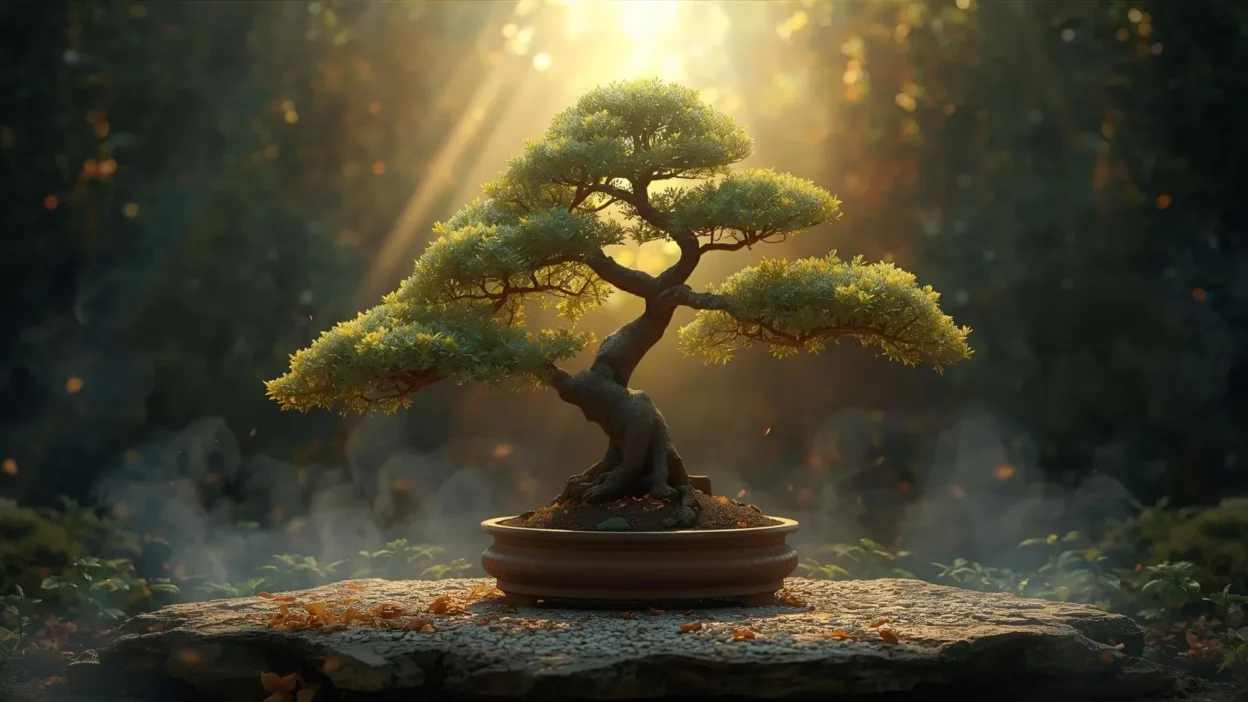
A few years ago, a friend gifted me a bonsai tree after a tough breakup. At first, I didn’t get it. Why would someone give a tiny tree in a shallow pot when my whole world felt like it had fallen apart? But as days passed, I found myself watering it, trimming it, watching it grow slowly but purposefully. One morning, while sitting in silence with the bonsai, something clicked. This wasn’t just a tree. It was a mirror of my healing, a symbol of patience, strength, and quiet beauty.
Bonsai trees might be small, but their symbolism runs deep. These miniature trees speak to the soul’s quiet resilience, the beauty of stillness, and the art of growing inward before outward. Let’s explore the spiritual meaning of bonsai tree symbolism and how it connects to your journey.
Bonsai Tree Symbolism Meaning
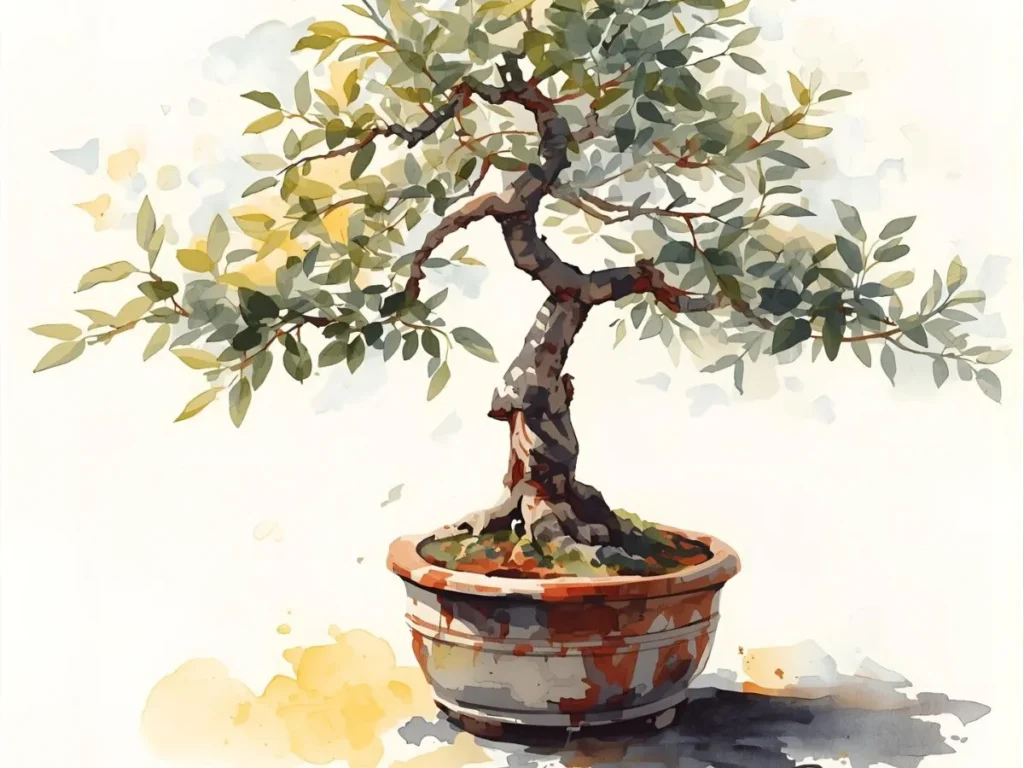
At its heart, the bonsai tree symbolizes balance, harmony, and perseverance. Even though it is carefully cultivated in a small container, the bonsai thrives. This reflects our human ability to grow gracefully, even within limitations.
Bonsai trees also represent:
- Inner peace – their quiet form invites reflection and calm.
- Patience – they take years, even decades, to grow into perfection.
- Control and discipline – they are shaped not by nature alone but by intention and care.
- Beauty in imperfection – their gnarled branches and unique forms remind us that scars and twists are part of the journey.
In spiritual circles, the bonsai is often used as a living meditation — a way to focus on slow, intentional growth, much like healing or self-discovery.
What Does the Bonsai Tree Symbolism Explain?
Bonsai symbolism explains how we can find strength in smallness and peace in structure. Each tree is a blend of nature and human effort, echoing how our lives are shaped both by fate and choice.
Symbolically, a bonsai shows that:
- You can thrive in tight spaces. Even with constraints — emotional, financial, or physical — growth is possible.
- Growth is not always visible. Much like the tree’s roots, our deepest growth often happens unseen.
- Beauty takes time. The most meaningful things in life are not rushed.
Many people keep bonsai trees in their homes or meditation spaces to remind themselves to slow down, breathe deeply, and trust the process.
What Does the Bonsai Tree Symbolism Explain in “A Work of Artifice”?
In Marge Piercy’s poem “A Work of Artifice”, the bonsai becomes a symbol of oppression, particularly of women. The tree is stunted, trimmed, and shaped — not allowed to grow freely. The poem compares this to how society limits people’s natural potential, often by subtle control and conditioning.
Here, the bonsai represents:
- Manipulation disguised as care
- Control disguised as love
- How culture can limit true growth
The poem gives bonsai symbolism a powerful feminist message: that not all shaping is supportive. Sometimes, it’s limiting. This version of bonsai symbolism asks us to question: Are we growing naturally, or are we being trimmed to fit someone else’s idea of beauty?
Meaning: Bonsai Tree Symbolism in Everyday Life
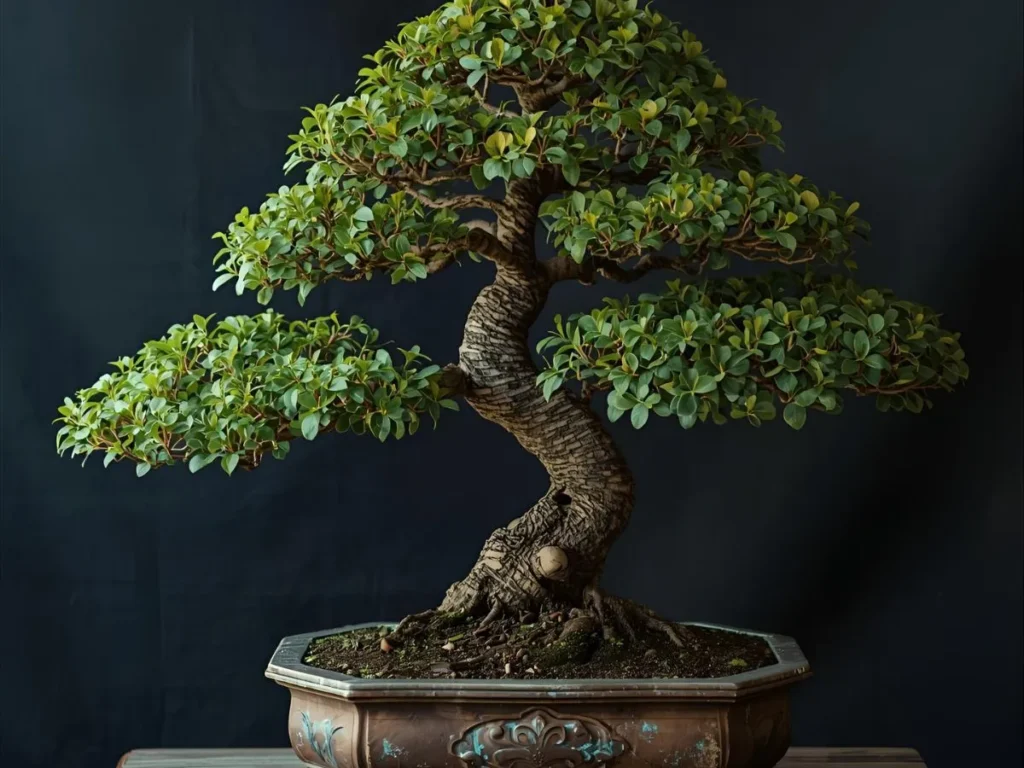
If you’ve ever felt like you’re being held back or living in a small space — physically, emotionally, or spiritually — the bonsai tree can feel deeply personal.
Its symbolism invites you to:
- Honor your limits without feeling limited
- Embrace the slow process of becoming
- See your life as a work of sacred intention
Whether you’re recovering from trauma, rebuilding your life, or just learning to love yourself as you are, the bonsai tree whispers:
“You are enough. Even now. Even here.”
Japanese Bonsai Tree Symbolism
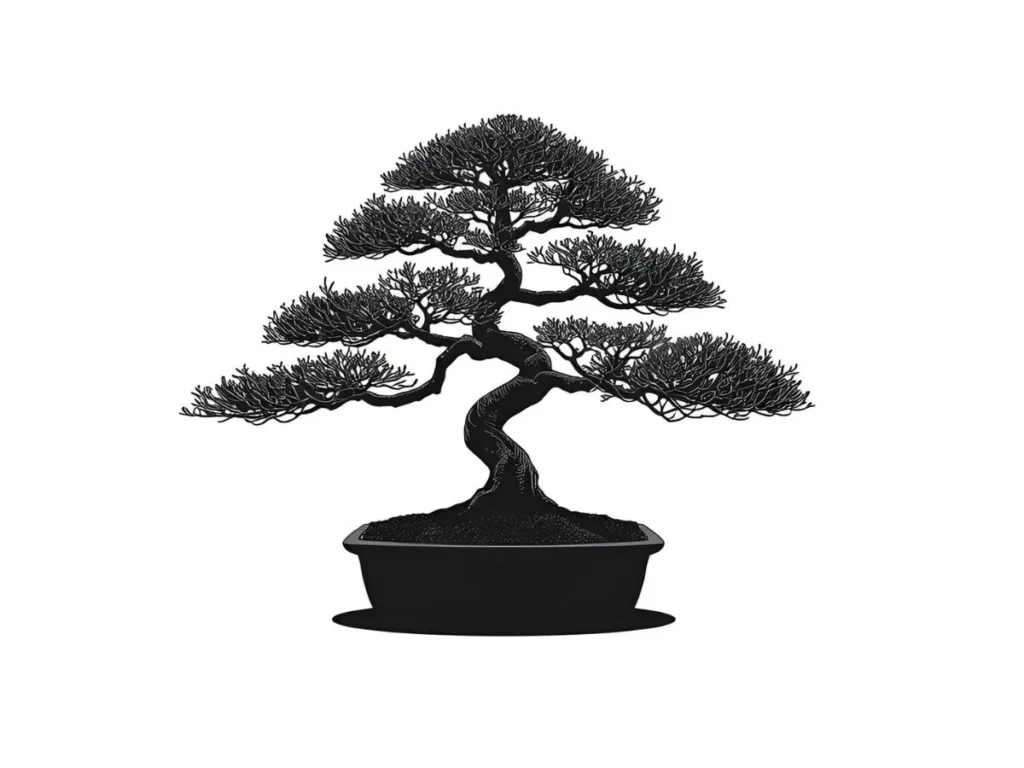
In Japanese culture, the bonsai is more than just a tree — it’s a living art form rooted in Zen Buddhism. It reflects wabi-sabi, the beauty found in imperfection and impermanence.
Japanese bonsai symbolism includes:
- Harmony with nature – humans and the natural world working together.
- Simplicity – removing the unnecessary to reveal truth.
- Discipline and mindfulness – regular care as a meditative act.
To the Japanese, a bonsai tree is not merely decorative — it is a spiritual companion, reminding us to seek balance, stay grounded, and honor our roots.
Real-Life Scenarios: The Bonsai Speaks
1. Sara’s Divorce & the Healing Bonsai
After a painful divorce, Sara was given a small juniper bonsai. Every morning, she trimmed its branches as a form of meditation. Over time, she saw herself in the tree: broken but blooming. The bonsai didn’t erase her pain, but it gave her a symbol of slow, beautiful healing.
2. David’s Anxiety & the Ritual of Care
David struggled with anxiety and racing thoughts. A therapist recommended he care for a bonsai. At first skeptical, David found peace in the slow watering and pruning. The act of tending the tree became a daily anchor, helping him feel in control of his inner world.
3. Amira’s Spiritual Awakening
Amira received a bonsai during her spiritual journey. As she grew in her mindfulness practice, she began to see the tree as a spiritual mirror. Each leaf, each bend, symbolized parts of herself she was learning to love — especially the parts that were once ignored or judged.
FAQs: Bonsai Tree Symbolism
Q1: Is keeping a bonsai tree good luck?
Yes, many cultures see bonsai trees as a sign of prosperity, harmony, and peace. They attract positive energy when placed mindfully in a home or workspace.
Q2: What does a dying bonsai tree symbolize?
A wilting or dying bonsai may symbolize neglect, stress, or imbalance — not just in the plant, but in your life. It can be a gentle nudge to pause and reassess what areas of your life need care.
Q3: What’s the spiritual lesson of a bonsai tree?
The bonsai teaches patience, humility, and the art of presence. It reminds us that real growth often happens in small, quiet ways — and that beauty lies in the details.
Q4: Do different bonsai trees carry different meanings?
Yes. For example, the juniper bonsai symbolizes protection and purification, while ficus bonsai is linked to knowledge and inner strength. Each species has its own subtle symbolism.
Q5: Can a bonsai tree represent a person?
Absolutely. Many people dedicate bonsai trees to loved ones or themselves. The tree can become a living tribute — a symbol of someone’s journey, strength, and unique story.
Conclusion:
In a world that often moves too fast and demands too much, the bonsai tree offers a soft rebellion. It says: Grow slowly. Grow meaningfully. Grow your way.
Whether you see it as a work of art, a spiritual tool, or a mirror of your own growth, the bonsai tree reminds us that true beauty doesn’t shout — it whispers. It doesn’t need to be big to be powerful. And neither do you.
So the next time you see a bonsai tree, pause. Let its quiet grace speak to your soul. Let it tell you that you are growing — perfectly, purposefully, and in your own time.
Bonsai tree symbolism isn’t just about a tree.
It’s about you — and the quiet, courageous journey of becoming whole.